
The Problem Bitcoin Was Built to Solve
For centuries, we have trusted intermediaries to store and transfer money. Banks, governments, and financial institutions assumed the role of guaranteeing that transactions were valid. If you want to send money abroad, you need a bank. If you want to store your savings, you depend on a bank. When banks fail or governments decide to freeze accounts, as happened in Argentina in 2001 and Cyprus in 2013, your savings become hostage to decisions you never made.
There is also the problem of inflation. When governments need money, they often simply print more. The more money in circulation, the less each unit is worth. The money you saved ten years ago buys far less today than it did back then.
How Bitcoin Was Born
In October 2008, at the height of the global financial crisis, a person or group using the pseudonym Satoshi Nakamoto published a nine-page document titled "Bitcoin: A Peer-to-Peer Electronic Cash System." The paper proposed an electronic money system that would work directly between people, with no intermediary of any kind.
Nobody knows to this day who Satoshi Nakamoto is. It could be one person or a group. In 2011, Satoshi simply stopped communicating and disappeared, leaving the project in the hands of a global community of developers.
In January 2009, the first Bitcoin block was mined. Embedded in that block was a symbolic message: the headline of the British newspaper The Times that day, reading "Chancellor on brink of second bailout for banks." It was a direct critique of the system Bitcoin intended to replace.
How Bitcoin Works
Bitcoin runs on a technology called the blockchain. Think of it as a giant spreadsheet that records every transaction ever made. That spreadsheet does not sit on a central server that can be hacked or shut down. It is simultaneously copied on thousands of computers around the world.
When someone makes a Bitcoin transaction, it is broadcast to the entire network. Computers scattered across the planet, called miners, compete to validate the transaction by solving complex mathematical calculations. The first to solve it receives a Bitcoin reward. Once validated, the transaction is added to a block, which is linked to the previous block, forming an immutable and public chain.
Why Bitcoin Has Value
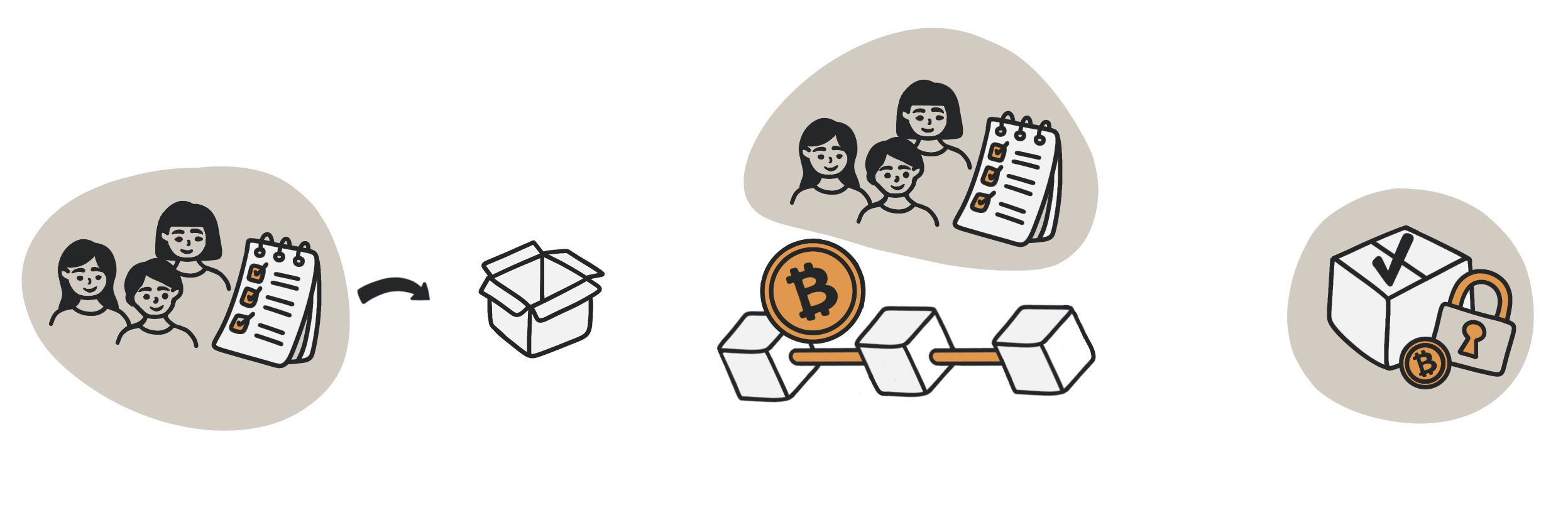
Bitcoin was programmed with a maximum supply of 21 million units. There will never be more than that. Approximately every four years, an event called the halving occurs. The reward that miners receive for validating transactions is cut in half. This reduces the rate at which new Bitcoin enters circulation, creating progressive scarcity. Historically, halvings have been followed by periods of strong appreciation.
Beyond scarcity, Bitcoin has value because it solves real problems. People in countries with unstable currencies use Bitcoin to protect their savings. Immigrant workers use it to send money home without paying remittance fees that can reach 10 to 15 percent. Companies use it for fast and cheap international transactions.
The History of Bitcoin's Price
In 2010, an American programmer named Laszlo Hanyecz paid 10,000 Bitcoin for two pizzas. That was the first documented use of Bitcoin to purchase something in the real world. Those 10,000 Bitcoin were later worth more than 700 million dollars.
Bitcoin has gone through dramatic cycles of rises and falls. In 2013, it climbed from 13 dollars to over one thousand dollars in a single year. In 2017, it reached nearly 20,000 dollars and then dropped by more than 80 percent. In 2021, it surpassed 69,000 dollars. In 2024, it broke 100,000 dollars for the first time.
What to Consider Before Investing
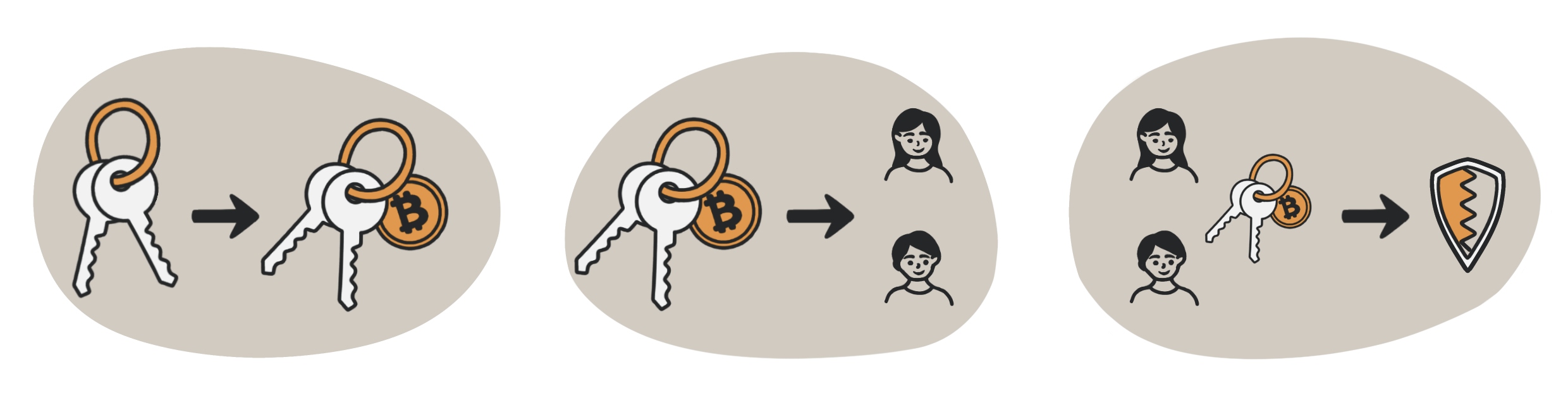
Bitcoin is not an investment for people who cannot sleep through price swings. In a single day, the price can rise or fall by 10, 20, or even 30 percent. Those who panicked and sold during downturns lost significant money. Those who stayed calm and understood what they held survived and, in most cases, came out ahead.
Why Bitcoin Matters Beyond Investment
Bitcoin proved that it is possible to have a monetary system that operates without a central bank, without a president, without a CEO, and without any central authority. The rules of the code govern, and those rules only change if the majority of the network agrees.
For people living in countries with out-of-control inflation, banking systems that exclude the majority of the population, or governments that confiscate wealth, Bitcoin is not speculation. It is a financial lifeline.
Where to Start Learning
The first step is to read Satoshi Nakamoto's original white paper, available for free online. It is only nine pages and is surprisingly accessible even for people without a technical background.
Bitcoin now has more than fifteen years of history. It has survived government boycotts, exchange bankruptcies, regulatory crises, and attacks of every kind. Each time its death was declared, it came back stronger and more widely adopted.
If you have read this far with curiosity, that is already the beginning of something important.